
Reflection
Completing my Social and Cultural Diversity Analysis helped me develop a deeper understanding of how my personal history, cultural identity, and life experiences can influence the way I understand and interact with others. One of my greatest areas of growth was becoming more aware of my personal biases and recognizing how unresolved experiences can potentially affect my work with clients. In the paper, I reflected on my mixed-race identity, family experiences, experiences with colorism, and feelings surrounding my Mexican heritage. I also recognized that I may feel more comfortable with certain populations than others and that these reactions could influence the therapeutic relationship if I do not intentionally address them.
This assignment challenged me to look beyond simply believing that I am accepting of diversity and instead examine how my own experiences shape my perceptions. I learned that cultural competence requires continuous self-reflection, humility, and willingness to recognize areas where I still need to grow. My experiences at a predominantly White university and my involvement in cultural exchange opportunities also demonstrated the importance of meaningful interactions with people from different racial and cultural backgrounds. These experiences helped me recognize that individuals within the same racial or ethnic group can have very different identities, values, beliefs, and experiences.
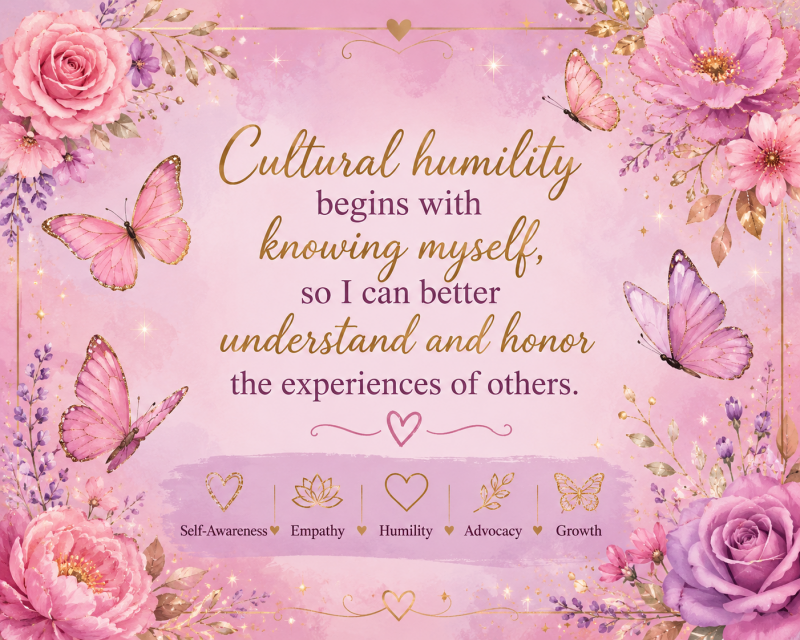
As a counselor-in-training, I have grown in my understanding that I cannot assume that a client's cultural experience is the same as my own. Instead, I need to remain curious, ask respectful questions, listen without judgment, and allow clients to define their own identities and experiences. My paper emphasized the importance of cultural humility and creating a safe and inclusive therapeutic environment where clients can explore their identities.
Moving forward, I plan to continue developing my multicultural counseling skills through self-reflection, supervision, consultation, professional development, cultural competence training, and continued education. I also recognize the importance of incorporating cultural considerations into assessment, treatment planning, interventions, and referrals. My goal is to become a counselor who does not simply acknowledge diversity but actively demonstrates cultural responsiveness, advocacy, and respect in my clinical practice.